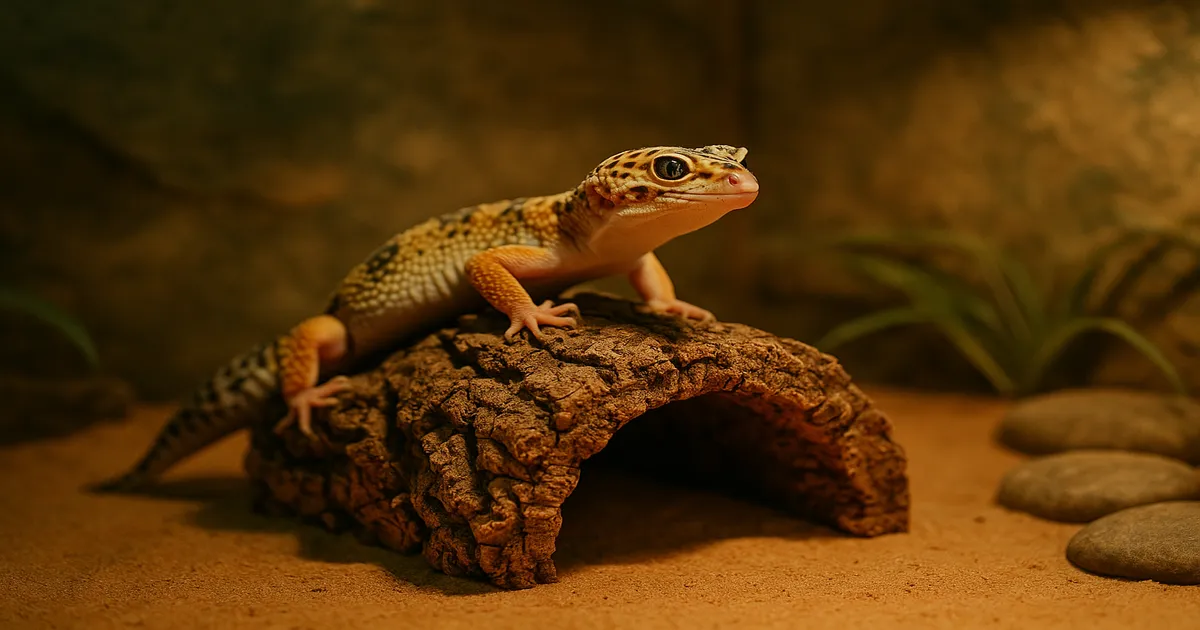
Quick Answer: Yes, your leopard gecko will almost certainly be scared — especially if it’s new, young, or hasn’t been handled much. This is completely normal. Leopard geckos are prey animals with hardwired fear responses, but with the right setup and patient, consistent handling, most geckos calm down significantly within weeks to months.
If you’re asking “will my leopard gecko be scared?” — the honest answer is yes, at least at first. That’s not a reflection of your gecko’s personality or your skills as a keeper. It’s biology. Leopard geckos have spent millions of years evolving to avoid being eaten, and no amount of captive breeding fully erases that instinct. What matters is understanding why they get scared and what you can actually do about it.
Will My Leopard Gecko Always Be Scared? (What to Expect)
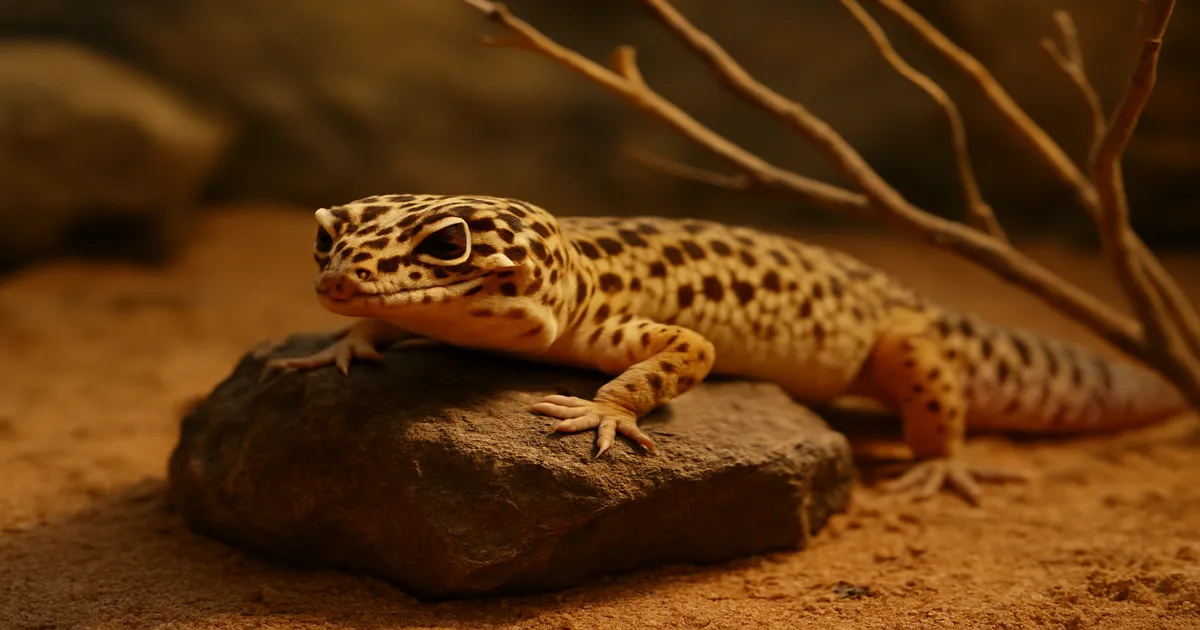
Leopard geckos — especially juveniles and newly acquired animals — are going to show fear responses. Hiding constantly, freezing when you open the enclosure, scrambling away from your hand: all of this is normal. Captive-bred animals are noticeably calmer than wild-caught ones, and adults are generally much more settled than juveniles, but even the most handleable gecko started out as a nervous little creature that thought everything was trying to kill it.
The good news is that fear diminishes — reliably and predictably — with the right approach. You’re not stuck with a permanently terrified animal. You’re working with one that just needs time.
Why Fear Is Hardwired Into Leopard Geckos
In the wild, leopard geckos (Eublepharis macularius) live in the rocky scrublands of Pakistan, Afghanistan, and northwestern India. They’re small, ground-dwelling, and nocturnal — sharing their habitat with snakes, birds of prey, and larger lizards that would happily eat them. Their entire survival strategy is built around not being seen, not being caught, and getting back underground fast.
That’s the animal you’re keeping. Decades of captive breeding have made them more tolerant of humans, but they’re not domesticated the way a dog is. The fear response is still in there, and certain triggers will reliably set it off.
Reading Your Leopard Gecko’s Fear: Body Language Guide
Misreading body language is one of the most common mistakes new keepers make. Here’s what fear actually looks like — and what it doesn’t.
Clear fear signals:
- Wide, fully dilated pupils in normal lighting — the single clearest indicator of a frightened gecko
- Vocalizations (squeaking, chirping) — if your gecko is making noise, it’s not curious, it’s stressed
- Freezing completely — fear-immobility, not sleep
- Explosive fleeing — bolting toward a hide the moment the enclosure opens
Commonly misread signals:
The slow tail wave trips up a lot of new keepers. It looks almost relaxed — a gentle, deliberate side-to-side movement. It’s not. It’s a warning. Your gecko is telling you to back off, and you’ll often see it right before a bite attempt.
I’ve also seen people mistake a frozen, wide-eyed stare for curiosity. Watch the pupils. A relaxed gecko has partially constricted pupils and a softer overall posture. A scared gecko looks like it’s trying to see everything at once. Once you’ve seen both, you won’t confuse them again.
Husbandry Mistakes That Make Leopard Geckos More Scared
Not Enough Hides
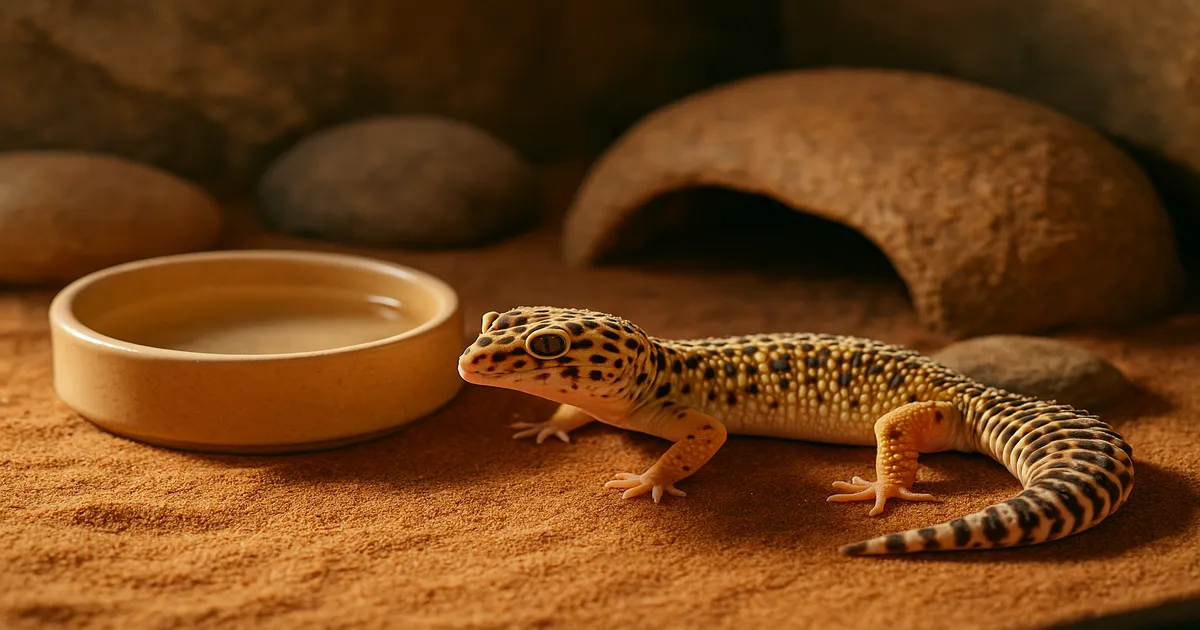
A gecko without a secure hide is in a constant threat-response state. Every moment it’s exposed, its nervous system is screaming at it to find cover. You need a minimum of three hides:
- Warm hide — positioned directly over the heat mat
- Cool hide — on the opposite end of the enclosure
- Moist hide — packed with damp sphagnum moss, essential for shedding
Sizing matters too. The hide should be just large enough for the gecko to fit inside and feel the walls on both sides. An oversized hide provides no security — it’s just an open box with a ceiling.
Wrong Temperatures
Temperature requirements aren’t suggestions:
- Warm side substrate surface: 88–92°F (31–33°C)
- Warm side ambient air: 80–84°F (27–29°C)
- Cool side ambient air: 72–76°F (22–24°C)
- Nighttime low: No lower than 65°F (18°C)
Here’s what most people get wrong: stick-on thermometers can be off by 10–15°F. I’ve seen setups that looked fine on paper but were running cold because the keeper trusted a cheap adhesive strip. Get an IR temperature gun (Etekcity Lasergrip 774) and actually check your substrate surface temperatures. A surprising number of “behavioral problems” — hiding, food refusal, skittishness — disappear once temperatures are corrected.
Bad Enclosure Placement
Leopard geckos detect vibrations through the substrate. Placing an enclosure near a subwoofer, a washing machine, or a heavily trafficked hallway means your gecko is receiving constant low-level signals that read as threat activity. Keep it somewhere quiet and stable.
Cohabitation Stress
Never house two males together — that’s obvious. But female cohabitation is also risky and generally not recommended by experienced keepers. Subtle bullying between females often goes unnoticed until one animal has been chronically stressed for weeks. If you’re housing females together and one seems perpetually skittish, try separating them before anything else.
The Right Setup to Reduce Fear
Front-Opening Enclosures Make a Real Difference
Every time you reach into a top-opening enclosure, you’re triggering the aerial predator response. Every single time. A front-opening enclosure (Exo Terra Glass Terrarium 36x18x18) lets the gecko see you coming and approach on its own terms. The difference in fear response is immediate and significant.
Minimum enclosure size for one adult is 36” × 18” × 18” (91 × 46 × 46 cm), though many experienced keepers now run 48” × 24” × 18” or larger.
Substrate Depth and Hides
Beyond the three-hide minimum, add cork bark flats and tubes throughout the enclosure (Exo Terra Snake Cave Large) so your gecko never has to cross open ground to reach cover. If it can see from one end of the enclosure to the other with no visual breaks, that’s a problem.
Loose substrate — a 60:40 topsoil/play sand mix at a minimum depth of 3–4 inches (7–10 cm) — lets your gecko dig micro-burrows and feel genuinely secure. Animals that seem chronically nervous on tile or paper towel often settle dramatically once they’re on loose substrate deep enough to actually dig in.
How to Handle a Scared Leopard Gecko
Mandatory Acclimation Period — Don’t Skip This
When you bring a new gecko home, leave it alone for two full weeks. No handling, minimal disturbance. Let it map its enclosure, establish its hides, and settle its nervous system. Skipping this step and handling immediately can set back the taming process by months. I’ve seen it happen repeatedly.
Scent Familiarization First
Before you start handling sessions, spend a few days placing your hand flat inside the enclosure without attempting to touch the gecko. Let it come to you, sniff your hand, investigate on its own terms. This single step makes a noticeable difference with particularly nervous animals.
The ‘Let Them Walk’ Method
The best taming technique I know is also the simplest: let the gecko walk from hand to hand. Place one hand in front of the other, and as the gecko reaches the end of one hand, position the other in front. Repeat. The gecko thinks it’s going somewhere, which engages exploratory behavior instead of escape behavior. Ten minutes of this daily will transform a skittish gecko faster than anything else.
Handling dos and don’ts:
- Do scoop from below, approaching from the front at gecko level
- Do end sessions when the gecko is calm, not when it’s panicking
- Do keep juvenile sessions to 5 minutes maximum, 2–3 times per week
- Don’t grab from above or the sides
- Don’t restrain a struggling gecko — put it down and try again later
- Don’t handle within 48–72 hours of feeding
Hand-Feeding Accelerates Everything
Offer a mealworm or dubia roach from your fingertips before each handling session. Within a few weeks, many geckos will start approaching the glass when they see you — because you’ve become associated with food rather than threat. This is probably the single biggest accelerator for taming, beyond basic handling consistency.
When Fear Might Signal Something Else
Enigma Syndrome
Certain morphs — particularly enigma-gene geckos — can exhibit spinning, star-gazing, and an inability to track prey. This is sometimes misread as extreme fear or disorientation, but it’s neurological, not behavioral. It requires different management (minimizing stress triggers, hand-feeding) rather than taming techniques. If you’re seeing these symptoms, research enigma syndrome specifically and consult a reptile vet.
Gravid Females
A female that’s suddenly restless, glass-surfing, and anxious may not be scared — she may be gravid and looking for somewhere to lay eggs. If she’s also losing weight or the restlessness is constant, egg retention is a real possibility and needs veterinary attention. Don’t assume behavioral changes in a previously calm female are just “personality.”
When to See a Vet
Some behavioral changes warrant a vet visit rather than a husbandry tweak:
- A previously calm gecko that suddenly becomes extremely fearful or aggressive
- Food refusal persisting beyond 3–4 weeks
- Fear behavior accompanied by visible physical symptoms (discharge, lethargy, abnormal posture)
- Suspected injury or tail autotomy
Frequently Asked Questions
Will my leopard gecko be scared of me forever?
Almost certainly not — assuming it’s captive-bred and you’re using correct handling technique. Most leopard geckos show noticeable improvement within 4–8 weeks of consistent, gentle handling. Full comfort can take 3–6 months for particularly nervous individuals. A few remain more reactive throughout their lives, but even these animals typically become manageable with patience.
What does a scared leopard gecko look like?
Wide, fully dilated pupils in normal lighting is the clearest single indicator. You’ll also see a tense body posture, freezing, or explosive bolting toward a hide. Slow tail waving and vocalizations like squeaking are escalating warning signals — back off when you see either.
Is it normal for a new leopard gecko to hide all the time?
Completely normal. A new gecko hiding constantly for the first 1–3 weeks is just doing what prey animals do in an unfamiliar environment. As long as it’s eating (or starting to eat after the initial adjustment period) and shows no signs of illness, hiding means the gecko feels secure enough in its hide to stay put. That’s actually a good sign.
Can chronic stress kill a leopard gecko?
Yes, indirectly. Chronic stress suppresses immune function, which leads to illness, and can cause a gecko to stop eating until it wastes away. Acute stress from mishandling can also trigger tail autotomy or, in extreme cases, cardiac events. This is why correct husbandry and gradual taming aren’t just about comfort — they’re about keeping your animal alive and healthy long-term.
How do I calm down a leopard gecko that won’t stop panicking during handling?
Try the burrito technique: wrap the gecko loosely in a soft washcloth with just its head exposed. The gentle pressure mimics the sensation of being inside a tight hide and often triggers a calm response almost immediately. It’s not a long-term solution, but it’s useful for building early positive associations with handling — and it genuinely works.