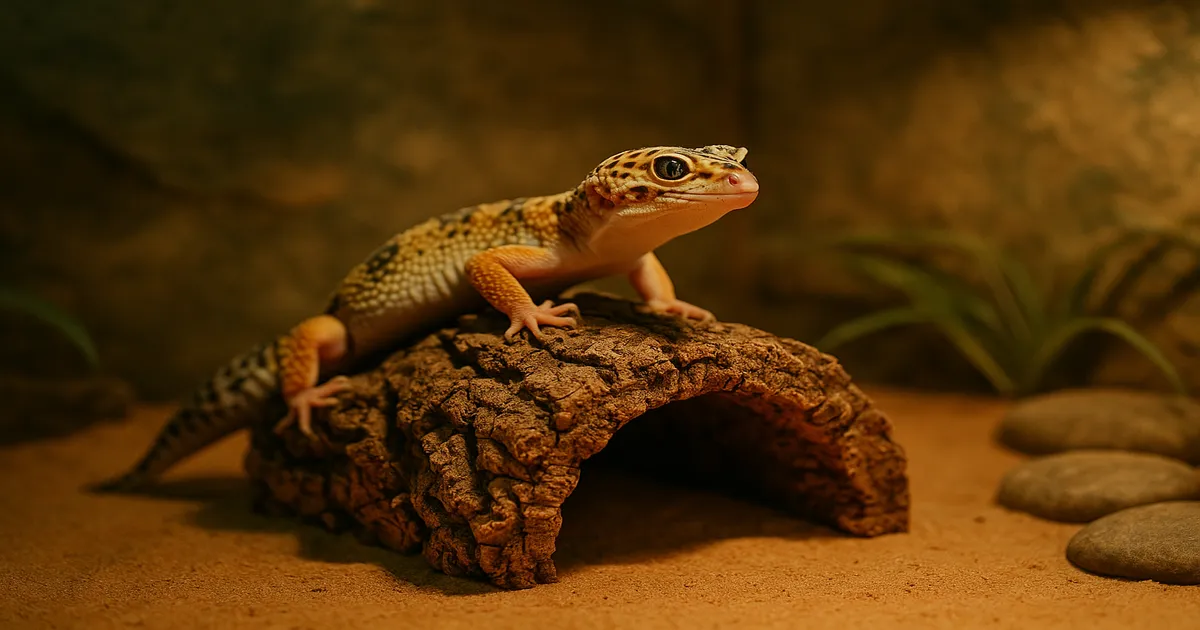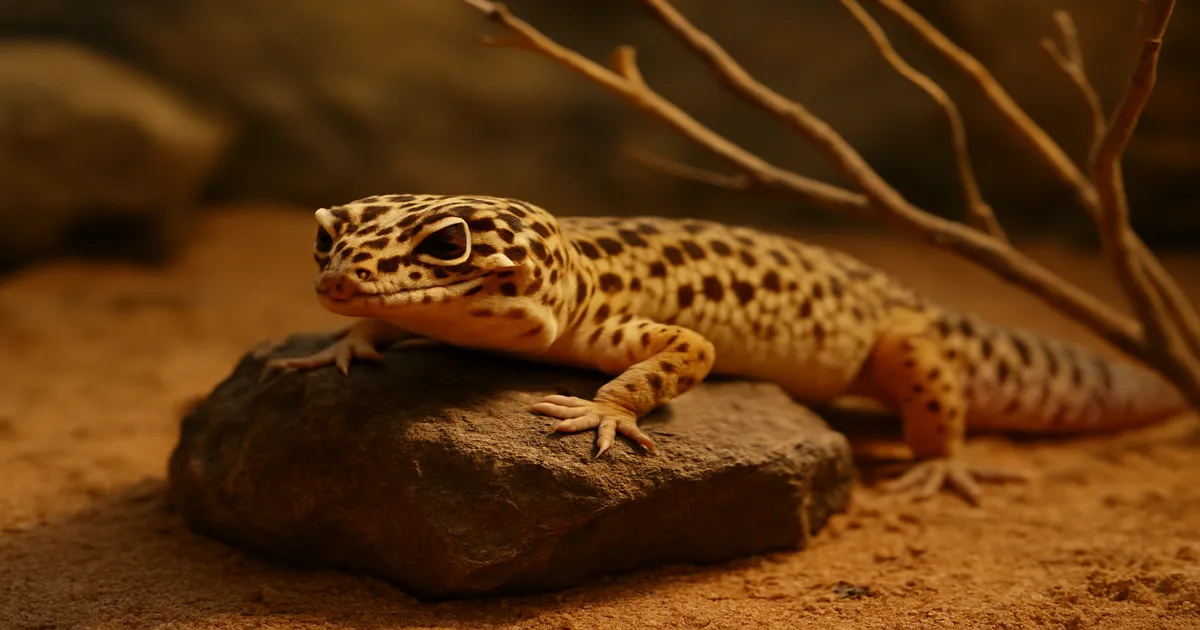
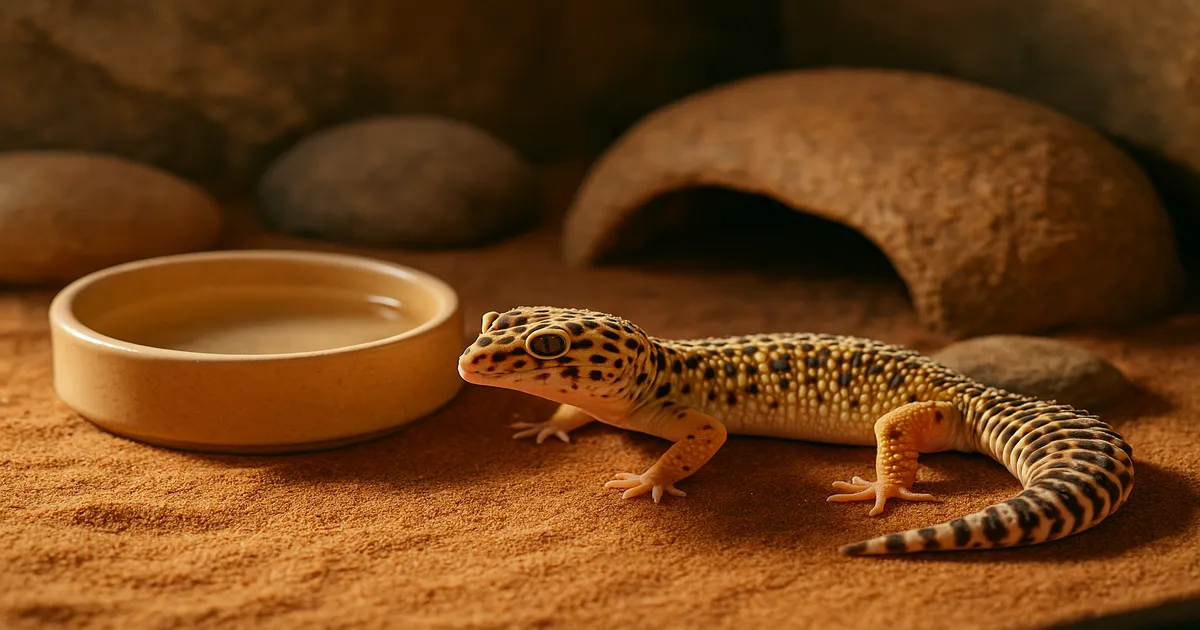
Quick Answer: Your leopard gecko is digging under her water dish because that space is cool, slightly humid, and dark — a near-perfect imitation of a burrow. It’s almost always a husbandry signal: she’s overheated, her moist hide is dry or inadequate, or she’s gravid and hunting for a lay site. Once you figure out which of those three is the problem, the fix is usually straightforward.
If you’re Googling “how do I stop my leopard gecko from digging under her water dish,” you’re in good company. It’s one of the most common behavior questions keepers ask, and honestly, it’s rarely a mystery once you know what to look for. The bad news is that ignoring it — especially in adult females — can have real consequences.
Why Leopard Geckos Dig Under the Water Dish
Their Wild Instincts at Work
Leopard geckos come from the rocky, semi-arid scrublands of Pakistan, Afghanistan, and northwestern India. Daytime surface temps out there can push past 120°F (49°C), so these geckos spend their days underground where it hovers around 75–82°F (24–28°C) — cool, stable, and far more humid than the surface above.
They’re not aggressive excavators in the wild. They’re opportunists. They’ll slide into an existing crevice, take over an abandoned rodent burrow, or wedge under a flat rock. In captivity, a water dish sitting on loose substrate offers exactly that: a shaded, slightly humid pocket with a low ceiling. Their brain says burrow entrance. Their feet start digging.
What the Water Dish Microclimate Is Telling You
The underside of a water dish tends to be the coolest, most humid spot in many enclosures — and that tells you something important about the enclosures where this behavior shows up most. A gecko seeking that spot is usually communicating one of three things:
- She’s too hot and it’s the only thermal refuge available
- Her moist hide is dry, missing, or just not working
- She’s gravid and instinctively hunting for cool, moist substrate to deposit eggs
Why Females Are the Repeat Offenders
Males do this occasionally, but females are the ones keepers complain about. Even without a male present, female leopard geckos develop follicles and experience the same hormonal drive to find a laying site. That drive is strong enough to make them work hard for even a marginal spot like the underside of a plastic dish. If your gecko is female and she’s digging persistently, egg development needs to be on your radar.
Diagnosing the Root Cause
Before you start rearranging the enclosure, spend ten minutes actually diagnosing the problem. One of the checks below will usually give you the answer immediately.
Temperature-Map Your Enclosure Properly
Get an infrared temperature gun and measure the actual surface temperature at five points: directly over the heat mat, the warm-side ambient floor, the center, the cool-side floor, and inside each hide. Stick-on dial thermometers are notoriously inaccurate — I’ve seen them read 80°F (27°C) while the actual surface underneath was 95°F (35°C). An infrared gun removes the guesswork. (Etekcity Lasergrip 774)
You’re looking for a warm hide surface of 88–92°F (31–33°C) and a cool-side floor of 72–77°F (22–25°C). If your cool side is running above 80°F (27°C), your gecko has nowhere comfortable to retreat — except under the water dish.
The Moist Hide Squeeze Test
Pull out a handful of substrate from your moist hide and squeeze it. It should feel like a wrung-out sponge — damp but not dripping, with no water releasing when you really squeeze. If it crumbles or barely feels moist, that’s your answer. Sphagnum moss dries out faster than most people expect, especially in winter when home heating pulls moisture out of the air. A hide that was perfect on Monday can be bone dry by Thursday.
Recognising Pre-Lay Behaviour in Gravid Females
A gravid female doesn’t just dig under the water dish — she does a whole routine. Watch for pacing the enclosure perimeter repeatedly in the evening, scratching at corners and the base of the glass, refusing food for several days running, and general restlessness that seems out of character. If you’re seeing that combination alongside the water dish digging, she’s looking for a lay site, not a thermal refuge. The response is different: she needs a lay box, not a thermostat adjustment.
Hide Size and Placement
Here’s a quick test: can you fit two fingers inside the hide alongside your gecko? If there’s significantly more room than that, the hide is too large and she probably feels exposed in it. Leopard geckos feel secure when they can touch the walls on multiple sides at once. A too-large hide gets ignored in favour of the tight, enclosed space under a water dish.
The Right Temperatures and Humidity — and Why They Matter
Thermal Gradient Your Gecko Needs
| Zone | Temperature |
|---|---|
| Warm hide / belly heat | 88–92°F (31–33°C) |
| Warm side ambient | 80–85°F (27–29°C) |
| Cool side ambient | 72–77°F (22–25°C) |
| Cool hide interior | 70–75°F (21–24°C) |
Belly heat via an under-tank heater connected to a thermostat is non-negotiable. Leopard geckos are thigmothermic — they absorb heat through contact with warm surfaces, not by basking under a light. An unregulated heat mat can hit 105°F (40°C) or higher, which makes the warm half of the enclosure genuinely uninhabitable and funnels your gecko toward the only cool spot she can find. (Inkbird ITC-306A)
Keep ambient enclosure humidity at 30–40% RH. The moist hide interior should reach 70–80% RH — and it should be the only reliably humid spot in the enclosure. If the underside of the water dish is more humid than the moist hide, you’ve accidentally built a better hide than the one you intended.
Where You Put the Water Dish Matters More Than You Think
Always place the water dish on the cool side. A dish sitting over or near the heat mat creates a warm-top, cool-bottom pocket that’s basically irresistible to a thermoregulating gecko. The water stays warm, the substrate underneath stays cool, and you’ve accidentally built the perfect burrow. Move the dish to the cool corner and half the problem often disappears on its own.
How to Stop Your Leopard Gecko from Digging Under Her Water Dish
Choose a Heavier Dish
Heavy ceramic or stone dishes with a wide, flat base are what you want. The wide footprint leaves less of a gap underneath, and the weight makes the dish hard to shift. Lightweight plastic dishes are easy for geckos to move, and their thin walls and small feet create an inviting cavity. Heavy ramekins or condiment crocks from kitchen supply stores work brilliantly and cost almost nothing.
The Slate Tile Trick
This is the single most effective physical fix I’ve found. Cut a piece of slate or ceramic floor tile to sit flush under and around the dish, then press it level with the substrate surface. With no substrate gap between the tile and the dish, there’s nothing to dig into. You can find slate tiles at any home improvement store, and a wet saw or tile cutter gets you the right size. It looks natural, conducts heat well, and solves the problem permanently.
Embed the Dish Into the Substrate
In bioactive or loose substrate setups, press the dish down until the rim sits flush with or slightly below the surface, then pack the substrate back around it. No rim gap means no digging opportunity. You’ll need to re-embed it periodically as the gecko disturbs the surrounding substrate, but it takes thirty seconds.
Fix the Moist Hide First
A dry or inadequate moist hide is the single most common cause of water dish digging. If you fix nothing else, fix this. The ideal moist hide is a snug plastic container with a hole cut in the lid — just large enough for the gecko to enter. Fill it with moistened sphagnum moss or coconut fibre; the interior should feel damp throughout, not wet.
Check it weekly at minimum, and every three or four days in winter when indoor heating dries the air. Refresh the moss completely every three to four weeks, or sooner if it starts to smell or look compacted. A gecko with a consistently good moist hide has no reason to excavate under the water dish.
Set Up a Lay Box If She’s Gravid
If your female is showing pre-lay behaviour, a lay box isn’t optional — it’s urgent. Egg binding (dystocia) is life-threatening, and it’s more likely when a female can’t find a suitable place to deposit her eggs.
Take a deli cup or small Tupperware container, cut a hole in the lid just big enough for her to enter, and fill it with moist coconut fibre or vermiculite — it should hold its shape when squeezed but not release water. Place it on the cool side and check it daily once she starts spending time inside. Leave her alone when she’s in there; disturbing a female mid-lay is stressful and can cause complications.
Mistakes That Make the Problem Worse
Running the heat mat without a thermostat. An unregulated mat doesn’t hold a safe temperature — it climbs. I’ve measured unregulated mats at 108°F (42°C). At that point the warm side is a no-go zone, and your gecko will spend all her time in the coolest spot available, which is usually under the water dish.
Skipping the moist hide because “they’re desert animals.” Yes, leopard geckos are from arid regions. They’re also from regions with underground burrows that stay cool and relatively humid year-round. In the wild, they’d never experience the bone-dry conditions of a typical heated enclosure. A moist hide isn’t a luxury — it’s a necessity, especially during shedding.
Dismissing digging as a personality quirk. “Oh, she just likes to dig” is how people miss a gravid female in distress or a temperature gradient that’s been wrong for months. Digging is communication. Take it seriously.
Frequently Asked Questions
Why does my leopard gecko keep digging under her water dish?
The space under a water dish creates a cool, humid, enclosed microclimate that mimics a natural burrow. Your gecko is digging there because something in her environment isn’t meeting her needs — usually an overheated enclosure, a dry moist hide, or egg-laying drive if she’s female. Identify which of those three applies and address it directly.
Is digging under the water dish a sign my leopard gecko is gravid?
It can be, especially if she’s also pacing the enclosure perimeter, scratching at corners, and refusing food. Female leopard geckos develop follicles even without a male present, and the drive to find a cool, moist laying site is strong. If you’re seeing those additional behaviours, set up a lay box immediately.
Where should I place the water dish in a leopard gecko enclosure?
Always on the cool side, away from the heat mat. Placing the dish over or near the heat source creates a warm-top, cool-bottom pocket that actively encourages digging. The cool corner of the enclosure, ideally flanked by cork bark or rocks to limit access to the underside, is the right spot.
Do leopard geckos need a moist hide if they have a water dish?
Yes, absolutely. A water dish provides drinking water; a moist hide provides a humid microclimate for shedding, thermoregulation, and egg development. They serve completely different functions. If your gecko is seeking the underside of her water dish for humidity, that’s a sign her moist hide isn’t doing its job — not a sign she doesn’t need one.
What’s the fastest fix to stop my leopard gecko from digging under her water dish?
Move the dish to the cool-side corner, switch to a heavy ceramic dish, and check your moist hide. Those three things together resolve the behaviour in the majority of cases. If she’s gravid, add a lay box. If temperatures are off, get an infrared thermometer and dial in your gradient before anything else.