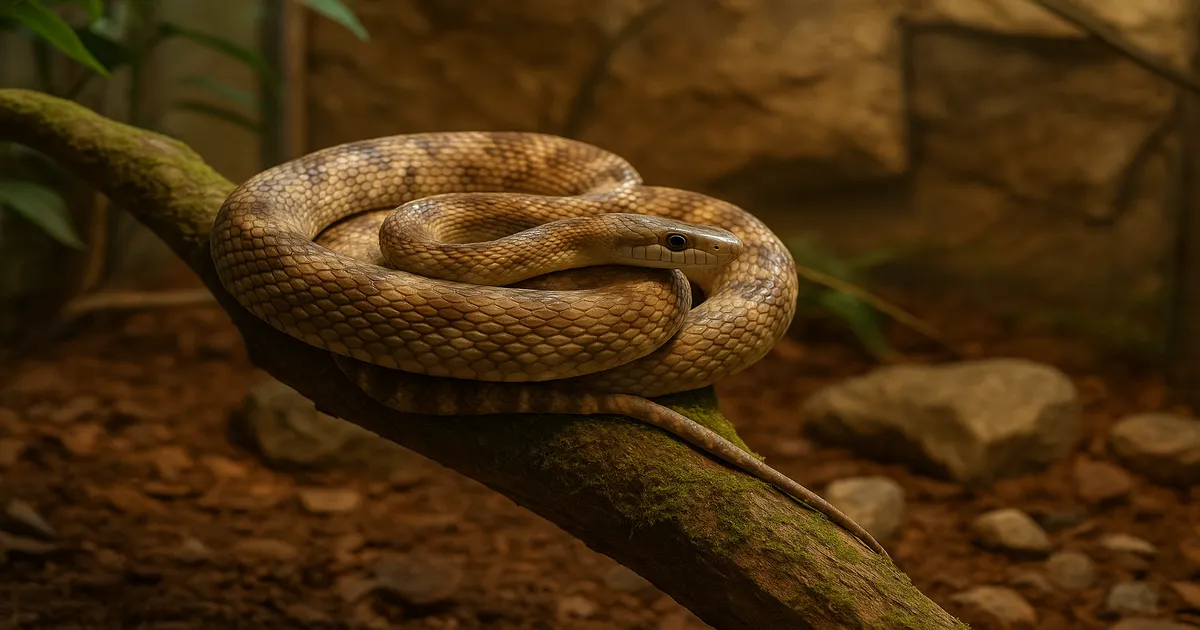
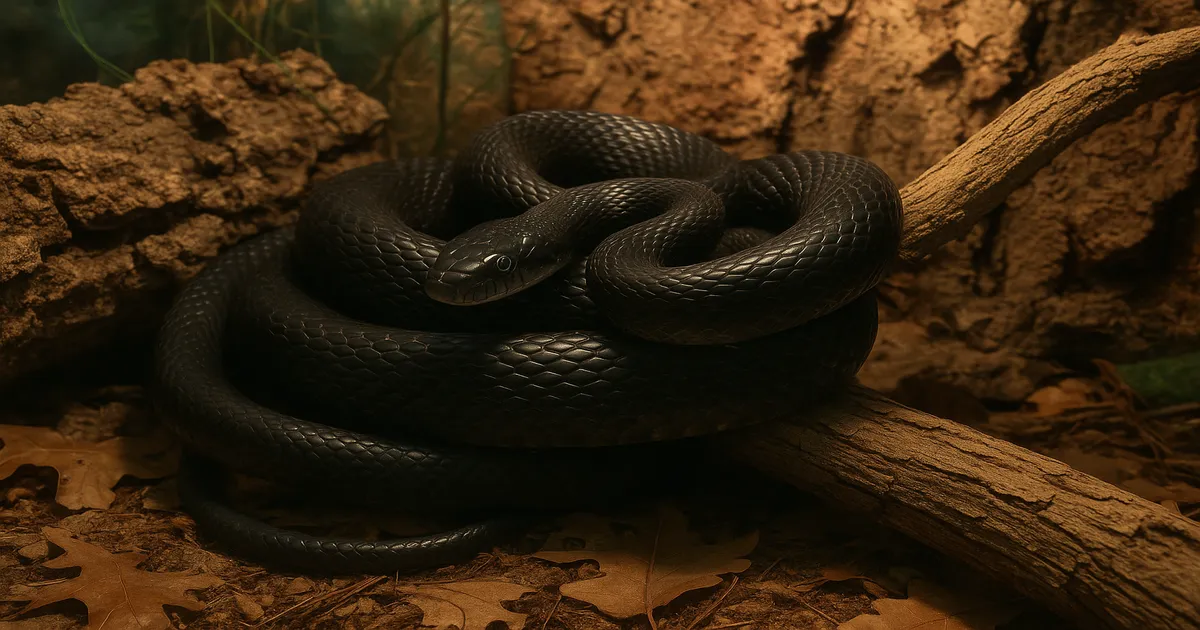
Quick Answer: A captive-bred black rat snake hatchling typically costs $25–$75 from a reputable breeder, while pet stores charge $60–$150 for the same animal. Factor in a first-year setup cost of $300–$700, and you’re looking at one of the most affordable pet snakes available — though remember, this is a 20–30 year commitment.
Black rat snakes are one of the best-kept secrets in the hobby. If you’re trying to figure out how much does a black rat snake cost before you commit, the short answer is: not much upfront. But like any reptile, the real cost is in the setup and the long haul — and knowing what to expect before you bring one home saves you money and headaches down the road.
How Much Does a Black Rat Snake Cost? (Price by Source)
Purchase Price at a Glance
| Source | Price Range |
|---|---|
| Captive-bred hatchling (breeder/expo) | $25–$75 |
| Captive-bred juvenile | $50–$100 |
| Captive-bred adult | $75–$200+ |
| Pet store | $60–$150 |
| Online (MorphMarket, Fauna Classifieds) | $30–$100 + shipping |
| Specialty morphs (leucistic, albino) | $100–$500+ |
| Wild-caught | $0–$30 (avoid these) |
Total First-Year Cost Estimate
Budget $300–$700 for your first year, including the snake, enclosure, heating, substrate, and a vet visit. A budget glass-tank setup lands closer to $300; a quality PVC enclosure with good equipment pushes toward $700. That’s genuinely affordable compared to most exotic pets — but this animal can live 25 years, so think of it as a long-term relationship, not an impulse buy.
Black Rat Snake Price Breakdown by Source
Captive-Bred Breeders and Reptile Expos
This is where I’d always point a first-time buyer. Hatchlings from reputable breeders run $25–$75, and you can ask exactly what you need to know: Is it captive-bred? When did it last eat? Any feeding issues? A good breeder answers all of that without hesitation. Reptile expos are worth seeking out too — you can see the animal in person, compare multiple breeders side by side, and often get a better deal than buying online.
Pet Store Pricing vs. Breeder-Direct
Pet stores typically charge $60–$150 for black rat snakes, and you’re usually getting less for more money. Staff often can’t tell you the feeding history, whether it’s captive-bred, or how old it is. That’s not always a dealbreaker, but it’s worth knowing what you’re giving up. If a pet store is your only option, ask anyway — some do keep records, and you can at least observe the animal’s body condition and behavior before buying.
Online Marketplaces (MorphMarket, Fauna Classifieds)
MorphMarket is my go-to for browsing breeders when I can’t make it to an expo. Standard animals list for $30–$100, but add $40–$75 for overnight shipping via FedEx or UPS, which bumps the real cost to $80–$175 for a hatchling. Still reasonable. Always check breeder reviews and ask for recent photos before you commit.
Wild-Caught Animals: Just Don’t
You’ll sometimes see wild-caught black rat snakes at reptile shows for next to nothing — $0–$30. Pass. Wild-caught animals routinely carry internal parasites (roundworms, tapeworms, sometimes cryptosporidium), external parasites like mites and ticks, and serious psychological stress. They can refuse food for months. And depending on your state — Michigan and Illinois both protect this species — collecting or purchasing a wild-caught specimen might be illegal. The $15 you save upfront can easily turn into $200+ in vet bills.
Specialty Morphs: Leucistic, Albino, and Intergrades
Leucistic and albino black rat snakes run $100–$300+, and yellow rat snake or Texas rat snake intergrades with unusual patterning can push $500 or more. These are beautiful animals, but get comfortable with standard husbandry first. Morphs are a rabbit hole best explored once you actually know what you’re doing.
One-Time Setup Costs
Enclosure Size and Type
Start hatchlings in a 10-gallon (38L) tank — not bigger. Small snakes get stressed in oversized enclosures and stop eating. Move up as the snake grows: a 20-gallon long (76L) for juveniles, a 40-gallon breeder (151L) for sub-adults. A full-grown adult needs at minimum a 4×2×2 ft (122×61×61 cm) enclosure, and ideally 4×2×4 ft (122×61×122 cm) to give them real vertical climbing space.
Black rat snakes are semi-arboreal — they raid bird nests in the wild and will use every inch of height you give them. For adults, PVC enclosures are my top recommendation: better insulation, lighter than glass, and they hold temperature gradients far more consistently. (Animal Plastics T8) Budget glass tanks work fine for hatchlings. Expect to spend $50–$150 on a starter setup and $200–$400+ on a quality adult enclosure.
Heating and Thermostats
You need a warm side of 85–88°F (29–31°C) and a cool side of 70–75°F (21–24°C). An under-tank heater (UTH) or radiant heat panel paired with a basking bulb covers most setups.
Here’s the part people skip: always use a thermostat. A UTH plugged directly into the wall can hit 120°F (49°C) or more and cause severe thermal burns on your snake’s belly. It’s one of the most preventable tragedies in this hobby. An Inkbird or Herpstat costs $30–$80 and protects a living animal. There’s no justification for skipping it. Total heating budget: $30–$120.
Substrate
Aspen shavings and cypress mulch are both excellent — affordable, easy to spot-clean, and safe. Aspen runs $10–$20 a bag and holds burrow tunnels well. Cypress mulch retains moisture better, which helps during sheds. Aim for 3–4 inches (7–10 cm) of depth so the snake can actually burrow.
Never use cedar or pine. The aromatic phenols in those woods cause respiratory irritation and liver damage. Not a “maybe avoid” situation — just don’t.
Hides, Climbing Branches, and Decor
Two hides minimum: one on the warm side, one on the cool side. A snake with only one hide can’t thermoregulate while also feeling secure, and a stressed snake stops eating. Add a humid hide — a plastic container with a hole cut in the lid and damp sphagnum moss inside — especially during shed cycles.
Climbing branches aren’t optional for this species. Cork bark, grapevine wood, and manzanita branches all work well. A heavy ceramic water dish rounds out the basics. Budget $40–$100 for hides and decor.
Lighting
Black rat snakes don’t strictly require UVB, but a low-output T5 HO tube (6%) is increasingly recommended and won’t hurt. What they do need is a consistent photoperiod: 12–14 hours of light in summer, 8–10 in winter. A simple outlet timer handles that automatically. A 40–75W incandescent or halogen bulb over a basking branch creates the warm spot they need. Lighting costs: $20–$60.
Ongoing Monthly Care Costs
Feeding: Hatchlings eat pinky mice every 5–7 days; adults eat adult mice or small rats every 10–14 days. Buy frozen rodents in bulk — a bag of 25 frozen adult mice runs $20–$35 and lasts an adult snake two months or more. Monthly feeding cost: roughly $10–$20. This is genuinely one of the cheapest snakes to feed.
Substrate and cleaning: Spot-clean weekly, full replacement monthly. A bag of aspen or cypress mulch runs $10–$20 and lasts 4–6 weeks. Add a few dollars for reptile-safe disinfectant and you’re at $5–$15/month.
Electricity: A single enclosure with a UTH and basking bulb adds maybe $5–$15 to your monthly electric bill. PVC enclosures are noticeably more efficient than glass. Not a significant expense.
Vet costs: Get a fecal float done on any new snake — $25–$50 at most reptile-experienced vets — and budget for an annual wellness check. Emergency visits for respiratory infections or thermal burns can run $100–$300+, which is exactly why proper husbandry matters. Find a reptile vet before you need one; not every vet sees snakes.
Care Requirements Overview
Temperature: Warm side 85–88°F (29–31°C), cool side 70–75°F (21–24°C). Nighttime drops to 60–65°F (15–18°C) are fine — black rat snakes are a temperate North American species and handle temperature swings well.
Humidity: 40–60% under normal conditions. When your snake’s eyes go blue and its colors dull, it’s in pre-shed — bump humidity to 60–70% and leave the humid hide accessible. Don’t handle during the blue phase; they can’t see well and will be defensive. The shed usually completes 7–14 days after the eyes clear.
Feeding: Match prey width to the widest point of the snake’s body. When in doubt, go smaller — prey that’s too large causes regurgitation. Always feed frozen/thawed. Live rodents can and do injure snakes, and it’s not worth the risk.
Handling: Hatchlings are nippy. That’s just the reality. With short daily sessions of 5–10 minutes, most black rat snakes calm down significantly within 3–6 months and become genuinely docile adults. Don’t give up on a defensive hatchling.
Common Mistakes That Cost You Money
Skipping the thermostat. Thermal burns from unregulated UTHs are a veterinary emergency. The thermostat costs less than one vet visit.
Buying wild-caught. A $20 wild-caught snake plus parasite treatment, months of feeding refusal, and potential legal fines costs far more than a $60 captive-bred hatchling that eats immediately and is already used to people.
Skipping quarantine. If you already have other reptiles, a new snake goes into a separate room for 60–90 days. No exceptions. Mites and internal parasites spread fast.
Undersized enclosures. A 4–6 foot snake in a 20-gallon tank is chronically stressed. Chronic stress suppresses the immune system, causes feeding refusal, and increases aggression. Also: lock the enclosure. Black rat snakes are legendary escape artists — they’ll exploit any gap and squeeze through openings that seem impossibly small.
Overfeeding. The snake should have a gently rounded triangular cross-section — not a round tube. Fatty liver disease shortens lifespan significantly. Stick to the schedule.
Is a Black Rat Snake Right for You?
Pros
- Hardy and forgiving of minor husbandry mistakes once established
- Inexpensive to feed — among the cheapest snakes to maintain
- Readily available captive-bred from reputable breeders
- Genuinely docile as adults; great for regular handling
- Native species with interesting natural history
Cons
- Notorious escape artists — enclosure security is non-negotiable
- 20–30 year lifespan is a serious commitment most people underestimate
- Hatchlings can be defensive and bitey for the first several months
- Need vertical space and climbing enrichment, unlike ball pythons
- Some states legally protect this species — check local regulations before buying
How Black Rat Snakes Compare to Ball Pythons and Corn Snakes
Ball pythons are more docile as hatchlings and tolerate handling sooner, but they’re notoriously picky eaters and need higher humidity (60–80%). Black rat snakes feed readily and are more active, but they grow faster and need more space. Corn snakes are the most direct comparison — similar difficulty, similar temperament — but black rat snakes get substantially larger and are better climbers. If you want a bigger, more active snake with a native-species connection, the black rat snake is the better pick. If you want something compact and low-maintenance, a corn snake might suit you better.
Frequently Asked Questions
How much does a black rat snake cost at a pet store vs. a breeder?
Pet stores typically charge $60–$150, while captive-bred hatchlings from a breeder or reptile expo run $25–$75. You’re paying more at a pet store for less information — feeding history, lineage, and age are often unknown. Breeder-direct is almost always the better deal.
Are black rat snakes good pets for beginners?
Yes, with one caveat: they’re better suited to beginners who do their homework first. They’re hardy, feed readily, and become docile with consistent handling. The main challenges are hatchling defensiveness and their need for a secure, properly sized enclosure — neither of which is hard to manage if you’re prepared.
How big do black rat snakes get in captivity?
Most captive black rat snakes reach 4–6 feet (1.2–1.8 m), with well-fed adults occasionally hitting 7 feet (2.1 m). They grow quickly compared to ball pythons and will need a full adult enclosure — at minimum 4×2×2 ft (122×61×61 cm) — within a few years of purchase.
Do black rat snakes bite, and are they dangerous?
Hatchlings bite fairly readily when defensive, but the bite is harmless — no venom, small teeth, and the wound is typically minor. Adults that have been handled consistently rarely bite at all. They’re not a dangerous snake by any reasonable definition.
How long do black rat snakes live in captivity?
With proper care, 20–30 years is realistic. Some individuals have exceeded that. It’s one of the most important things to consider before buying — this isn’t a short-term pet.